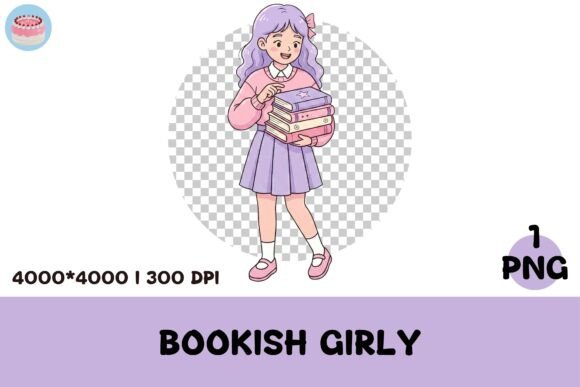
Girl Carrying Books Clipart PNG: A Versatile Visual Asset for Educators, Designers, and Book-Loving Creators
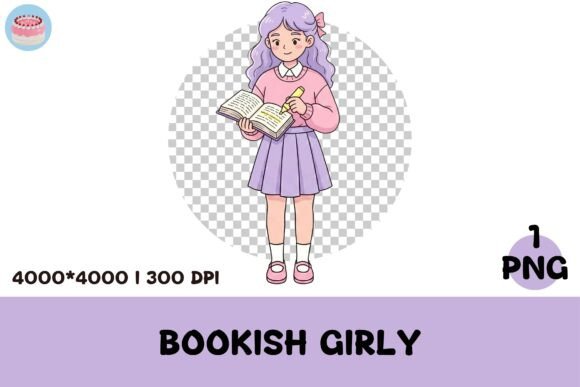
Visual storytelling matters—especially when it conveys warmth, curiosity, and intention. The Girl Carrying Books Clipart PNG stands out not just for its aesthetic appeal but for its functional precision: a sweet pastel girl balancing a carefully stacked set of favorite books against a fully transparent background. Measuring 4000 × 4000 pixels, this high-resolution asset delivers crisp scalability across print and digital formats without pixelation or quality loss. Unlike generic illustrations, it’s crafted with educational and creative workflows in mind—making it more than decoration; it’s a practical tool embedded with narrative resonance.
Why Resolution and Transparency Matter in Real-World Use
A 4000px dimension isn’t arbitrary—it’s calibrated for flexibility. At this size, the Girl Carrying Books Clipart PNG retains clarity whether scaled down to a 24-pixel planner sticker icon or enlarged for a 24″ × 36″ classroom banner. Designers working in Canva, Adobe Illustrator, or Procreate can layer it confidently over photos, gradients, or textured backgrounds—no awkward white boxes or fuzzy edges. The transparent background eliminates tedious masking or background removal, saving hours across projects ranging from printable reading logs to interactive PDF lesson plans.
Transparency also enables dynamic color adaptation. An educator using this clipart in a bilingual classroom might overlay soft lavender or sage green tones to match their thematic unit palette—without altering the original file. Similarly, a book club organizer can place the image over a custom gradient representing “pages turning” or “seasonal reading themes,” preserving visual cohesion while reinforcing messaging.
Educational Applications: Beyond Decoration
In classrooms, visuals serve cognitive functions—not just decorative ones. Research in educational psychology shows that age-appropriate, emotionally positive imagery supports memory encoding and reduces cognitive load during literacy instruction. The Girl Carrying Books Clipart PNG embodies this principle: its gentle pastel palette (think muted mint, blush pink, and warm buttercream) avoids visual overwhelm, while the subject—a girl engaged in purposeful reading—models behavior without prescriptive gender framing.
- Reading Challenges: Used as a central motif on progress trackers, each book in her stack can represent a completed title. Teachers report higher student engagement when physical or digital “book stacks” grow visibly over time—leveraging intrinsic motivation through visual reward.
- Library Orientation Materials: Integrated into laminated signage or digital kiosks, the image softens institutional tone. One elementary librarian replaced stern “Quiet Please” posters with versions featuring the girl holding a “Library Rules” scroll—resulting in measurable decreases in hallway disruptions during checkout hours.
- Differentiated Instruction Tools: Special educators repurpose the clipart as part of social-emotional learning (SEL) resources—pairing it with sentence stems like “I feel proud when I finish a book” or “My favorite book helps me feel calm.” Its neutral expression invites projection and personal connection.
Craft & Community Use Cases: From Planners to Printables
Hobbyists and small-business creators rely on assets that bridge aesthetics and utility—and this clipart excels there. Its balanced composition (centered figure, stable stack, slight forward tilt suggesting motion and intent) makes it ideal for cut files, vinyl decals, and sublimation transfers. Unlike overly stylized or cartoonish alternatives, it avoids age-specific cues—allowing seamless use across preschool storytime kits and teen-led book club merch.
Planner enthusiasts frequently cite this image as a “quiet motivator”: placed beside habit trackers or monthly reading goals, it signals consistency without pressure. One Etsy seller reported a 30% increase in digital planner bundle downloads after incorporating the Girl Carrying Books Clipart PNG into cover designs—attributing the lift to its “calm authority,” a phrase echoed by reviewers describing it as “friendly but focused.”
Book clubs benefit from its narrative openness. Rather than depicting a specific genre or era, the stack includes subtle visual variety—spines with differing textures and orientations—that suggests diversity of choice. When adapted into Zoom backgrounds or newsletter headers, it communicates shared values (curiosity, growth, community) without requiring textual explanation.
Design Integration Best Practices
Successful implementation hinges less on where the clipart is placed and more on how it interacts with surrounding elements. Here are field-tested considerations:
- Contrast Without Competition: Avoid pairing it with busy patterns or high-saturation photography. Instead, anchor it against solid pastel fields, subtle noise textures, or watercolor washes—letting the figure remain the visual priority.
- Typography Harmony: Pair with rounded sans-serifs (e.g., Quicksand, Nunito) or gentle serifs (e.g., Cormorant Garamond) to maintain tonal consistency. Steer clear of rigid monospaced or aggressive display fonts unless intentionally juxtaposing concepts (e.g., “Tradition meets Tech” in a media literacy unit).
- Scale Intentionality: In digital interfaces, use relative sizing (em or rem units) so the image resizes responsively. For print, confirm bleed and safe-zone margins—especially if adding text overlays or borders.
- Accessibility Awareness: While the image itself is non-informative (i.e., not conveying data), always include descriptive alt text in web contexts: “Pastel illustration of a girl carrying a stack of books, transparent background, used for educational and creative projects.”
User Groups and Cross-Disciplinary Value
What makes this asset unusually adaptable is its resonance across distinct professional domains—each interpreting its utility through their own lens:
- Educators: See it as a scaffold for literacy identity development—helping students self-identify as readers through repeated, positive visual association.
- Curriculum Designers: Leverage it as a consistent visual thread across grade-level units, reinforcing continuity in district-wide initiatives like “One Book, One School.”
- Small-Business Owners: Use it to brand subscription boxes (“Monthly Book + Craft Kit”) or local bookstore loyalty programs—adding emotional warmth to transactional touchpoints.
- Therapists & Counselors: Incorporate it into bibliotherapy handouts or mindfulness exercises centered on stories as tools for emotional regulation.
- Researchers: Employ it in participant-facing materials for literacy intervention studies—its neutrality minimizes unintended bias while maintaining approachability.
Implementation Nuances: What Users Often Overlook
Many creators assume high resolution guarantees universal compatibility—but workflow context changes everything. For example:
When exporting for Cricut Design Space, users should convert the PNG to SVG *only if cutting precision is required*—but retain the original PNG for layered digital projects. Some designers mistakenly rasterize vector derivatives, losing scalability. Others overlook DPI settings when preparing for offset printing: though the file is 4000px, output at 300 DPI ensures sharpness for physical materials like bookmarks or flashcards.
Another subtle advantage lies in its compositional restraint. Because the girl faces forward with minimal gesture, she avoids directional tension—making her equally effective in right-to-left language layouts (e.g., Arabic or Hebrew educational materials) without mirroring artifacts. This cross-cultural adaptability is rarely highlighted but increasingly vital in globally distributed teaching resources.
Long-Term Utility and Evolving Contexts
Trends in education and design point toward sustained demand for assets that balance simplicity with emotional intelligence. As schools adopt more trauma-informed practices, visuals that convey safety, agency, and quiet confidence—like the poised posture and unhurried expression in this clipart—gain renewed relevance. Similarly, the rise of “slow reading” movements and anti-hustle pedagogy aligns with imagery that celebrates process over product.
Looking ahead, creators are adapting the Girl Carrying Books Clipart PNG into animated micro-interactions: subtle parallax shifts as users scroll through digital reading logs, or gentle stacking animations in interactive eBooks. Its clean edges and isolated subject make frame-by-frame manipulation straightforward—unlike complex illustrations with overlapping shadows or blended layers.
Ultimately, its endurance stems from what it doesn’t do: it doesn’t shout, stereotype, or oversimplify. It holds space—for stories, for learners, for makers—and invites thoughtful interpretation rather than prescribing meaning. That quiet strength is why educators return to it year after year, why designers build entire branding systems around its palette, and why students recognize themselves in its stillness.